the island
The Executionersthe island is a tiny, unnamed lake island that serves as the Bowden family's seasonal refuge and as one of the clearest measures of how their sense of security changes. At first it is a controlled, familiar setting for family recreation: a beach, a low hill, deep water near the shore, a boat moored just offshore, and the ordinary noise of children at play. By the end of the novel, its return as a Labor Day destination carries a different emotional weight. The island remains physically much the same, but the family that visits it has learned that safety is provisional and that an apparently settled life can depend on a fragile web of circumstance.
Definition and Physical Setting
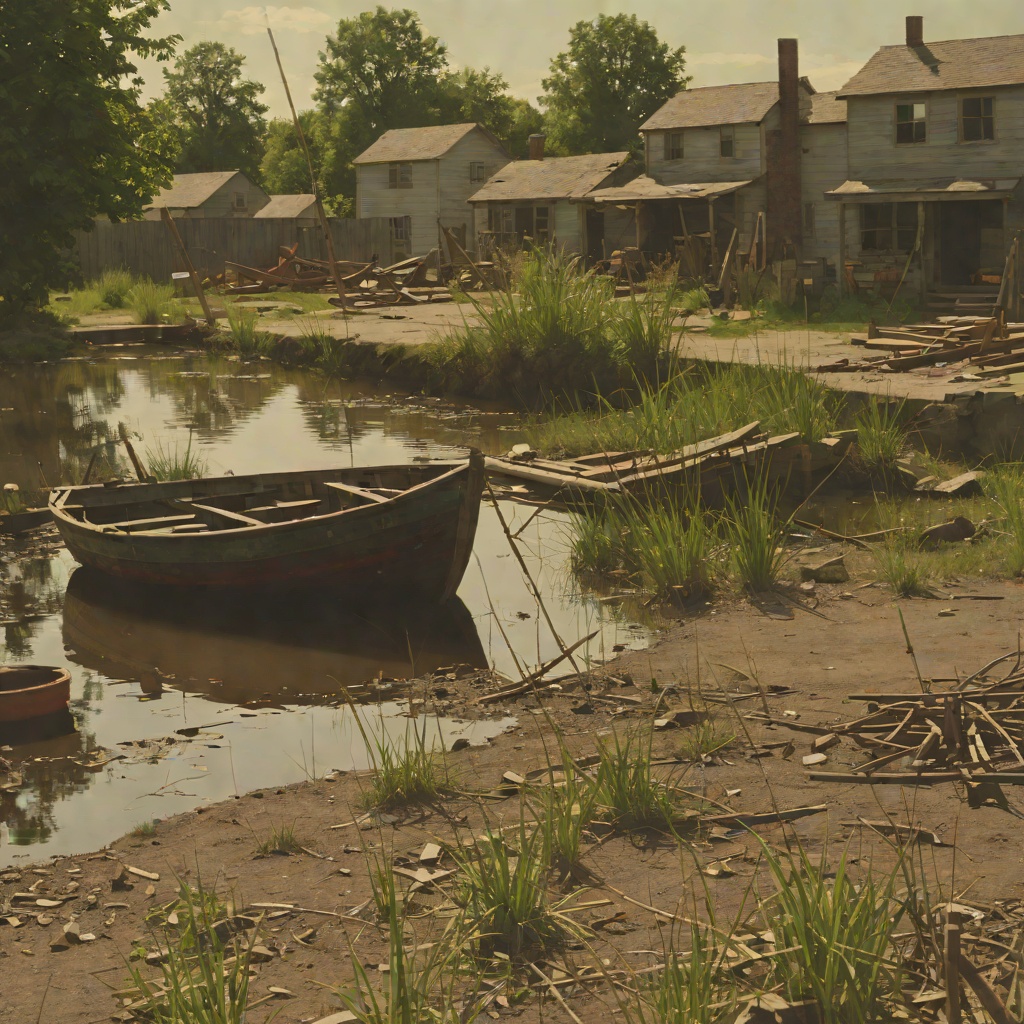
the island lies twelve miles out in the lake, northwest of New Essex. It is so small that it has no name, appearing on charts only as a single dot accompanied by a warning about shoal waters. Its geography is nonetheless sufficient for the Bowdens' repeated excursions: there is a hill, a beach, and reasonably deep water close to shore. The modesty of the place is part of its attraction. It is not a developed resort or a public landmark, but a private-feeling space reached by boat and separated from ordinary roads, houses, and obligations.
The family's boat, the Sweet Sioux III, anchors the island's domestic pattern. During the first expedition of the year, the boat lies about a hundred feet along the curve of the beach, with its bow only ten feet from the sand. The music from a portable radio on its foredeck is barely audible from shore, preserving the impression of distance without turning the island into complete isolation. Jamie and Bucky thrash through the brush on the small hill behind the beach, while Sam Bowden lies nearby with Carol Bowden, beer in hand, digesting a picnic lunch under the Saturday sun.
The Island as Family Ritual
the island belongs to a repeated family calendar. The Bowdens discovered it in 1950, the year before Bucky was born, and thereafter expected to make three or four trips there every year. Its recurrence makes the location more than scenery: it is a ritual space in which family continuity can be felt through repetition. Children grow older there, boats return there, and the yearly movement from the mainland to the beach offers a temporary suspension of work, law, and household pressure.
The first visit presents the family in a seemingly intact formation. Eleven-year-old Jamie is expected to send six-year-old Bucky down to ask whether it is time to return to the water. Nancy, who in earlier years would have been racing and shouting with the younger children, is now fourteen and has brought fifteen-year-old Pike Foster as a guest. She and Pike lie in the sun on the foredeck while a progressive disc jockey's unusual musical selections drift faintly across the water. These details establish the island as a place where childhood independence, adolescent self-consciousness, parental observation, and ordinary summer pleasure coexist.
The island also functions as a space where Sam tries to maintain the belief that his world is under control. Its distance from New Essex and its established place in the family's annual routine support his desire to see marriage, health, work, and family life as stable facts. Yet the island cannot keep anxiety outside. Even during this ostensibly peaceful outing, Sam is troubled and struggles to convince himself that everything is right. The location therefore introduces the central contrast between visible leisure and inward alarm.
Isolation and the Geography of Threat
The island's separation is initially comforting because it places the family beyond the immediate reach of ordinary life. Later, however, the same separation reveals the limits of that comfort. When the family recognizes that Cady's threat reaches beyond Sam and Carol, Nancy is understood to be within the danger as well. The children are not merely background figures in a parental conflict; they lie within its orbit, and the island becomes a setting where that vulnerability is made visible through the family's physical arrangement around the beach, boat, hill, and water.
The novel repeatedly places refuge beside exposure. On the island, the Bowdens can gather together, swim, eat, and follow a tradition, but the smallness that makes the place intimate also makes its boundaries legible. There is little space between the beach and the hill, between the boat and the shore, or between family privacy and the surrounding wilderness. The island's apparent enclosure is thus double-edged: it concentrates affection and makes escape or concealment imaginable, but it also turns the family into a clearly bounded group.
This geography anticipates the later menace surrounding the Bowden house. After the family returns to the mainland, Sam studies the wooded hillside behind the barn through binoculars, wishing the terrain were less densely covered and contained fewer large gray boulders and fallen trees. The threatening hill is not the island's hill, but the same basic arrangement recurs: a domestic or recreational clearing bordered by elevated, irregular, partly hidden ground. The novel transfers the island's isolated pleasure into a suburban landscape where the hill and woods can conceal an implacable pursuer.
Return, Memory, and Changed Meaning
After the siege and its violence, the Bowden family returns to the island on Labor Day for the traditional last trip of the year, with Tommy Kent as a special guest. The timing matters. The outing is still part of the established calendar, and the island still offers warm weather, a fresh wind across the lake, food at noon, and children swimming at two o'clock. But the return is no simple restoration of the old world. The ritual survives, while the family's understanding of what supports it has changed.
Sam sits on a blanket in swimming trunks with a can of beer and a cigarette, his arms resting on raised knees. Carol lies beside him with one arm across her eyes. The familiar posture echoes the first visit, yet the emotional atmosphere has been transformed by what the family has endured. Carol speaks of an early childhood memory of a carnival merry-go-round: her father paid to make the ride last, the faces blurred, the music grew louder, and she felt unable to make it stop. Her plea that she wants the spinning and fear to end gives the island visit a psychological counterpoint. The open lake and recurring family holiday stand against an inner experience of helpless repetition.
Carol's memory makes the island a site of recovery that is not the same as forgetting. She acknowledges that people everywhere can experience catastrophe with the incredulity that it cannot be happening to them and that life rests on a delicate web of incidence and coincidence. Sam answers that he knows. The island therefore becomes the setting for a shared recognition: the family has regained the capacity to gather, but not the former illusion that its happiness was guaranteed.
Narrative Significance
the island gives the novel a compact image of the American middle-class ideal it places under pressure. It represents leisure, family continuity, private property, mobility, and the confident repetition of a prosperous postwar life. Its smallness and namelessness make that ideal feel personal rather than grandiose, yet its location twelve miles from shore also exposes the precariousness beneath the comfort. The family can reach the island because its routines, resources, and relationships work together; none of those conditions is invulnerable.
As a narrative device, the island also establishes a rhythm of departure and return. The Bowdens leave the mainland to inhabit a protected family world, then come back carrying the knowledge that no distance can permanently exclude danger. At the end, they repeat the journey once more, but the repetition is charged with difference. the island has not become a haunted place in any literal sense. Instead, the history brought to it by the returning family makes its ordinary features newly legible: the beach is still a beach, the hill still a hill, and the lake still open, but the family now understands that security is an achievement maintained against forces that can enter even the most familiar spaces.